Showing posts with label management. Show all posts

Sunday, February 26, 2012

What can CEO’s learn from Amitabh Bachchan ??


How come a man who was almost being forgotten and completely written off, could spark everyone’s imagination once again? A legend whom banks had almost abused was writing cheques of One crore. Gosh!!! It was big money those days. It still is but, in those times, it was unheard of on telly. How could television make such a big star out of a sun almost set? All of a sudden, everything seemed to be not just alright but incredible. Producers were making beeline at his doorsteps. His cash boxes were ringing like never before. Amitabh is the most expensive and the busiest star again.


I’ll start with some lessons, learning and clues, covering diverse perspectives.
The first and most important lesson I draw from his days of ignominy when he was down and almost out. The learning is change becomes inevitable if you are resolved to turn things around you. No matter how much intimidation you face but, persist till you have the last laugh. You will (have the last laugh). And, whether or not you think you can achieve something you are actually right. A lesson for every individual.
Second I draw from his early days. This simple learning substantiates the old saying that most of the accomplishments in this world are credited to some tired persons who kept trying in spite of streak of disappointments. Dont Give up. You are not out untill you think you are out.
The third lesson relates to Marketing Management and refers to Product Life Cycle. Amitabh Bachchan’s life substantiates the PLC theory at times. At other times, it totally defies them all. The bottom line, however, is that if the product is dynamic enough, it can give the competition a run for its money. Such an old brand, Big B had his rough and tough times but has remained competitive for so many decades and has seen almost 4-5 generations (taking 10 years time frame for a new batch of actors entering). When he arrived there, it was the times of likes of Rajesh Khanna, Vinod Khanna and Dharmendra. His arrival on the scene was followed by the generation represented by Rishi Kapoor, Mithun Chakraborty. Then came the time of Sanjay Dutt, Anil Kapoor, Sunny Deol and Govinda. Then came the Khans. And, now we have the new blokes like Ranbir, Imran, Neil etc.
It was only during the times when a product re-look was required and he failed to match with the times, the sun started fading out for Amitabh. He went for bad films that didn’t either suit his aging persona or, were clichéd or, looked desperate to match with the new competitors at different times. He was mostly not being himself.
By the late 1980s Big B was at the peak of the Maturity stage, in terms of the product life cycle theory. Like most other products, defending market share was a very difficult task by this stage. Not only that the new entrants had entered and occupied a lion’s share in the market but our product (Big B) was also exposed to the hilt. It was losing its sheen and aging. Amitabh tried several strategies to resurrect things as a marketer does in a bid to help his product survive this decline. But, a mere tweaking in his characterization would not help. That is why, his bid to re-invent himself did not work wonders for the next 8-9 years between Shahenshah and till the launch of ABCL. Some of the well-chiseled characters worked but its impact remained strictly limited on the entire prospects of the product in the market.
Agneepath, Shahenshah, Bade Miyan Chhote Miyan and Suryavansham were only some of the examples of this. Both offensive as well defensive strategies can be seen at work in the promotion planning of his films in this stage as compared to films before this. The larger-than-life positioning was normally made ostensible at this stage than before. Just like in history when kingdoms started getting diluted, the feudal lords as the remnants of those kingdoms started flaunting titles bigger than ever.
The problem with ABCL also had its root cause in the same market positioning of Big B. If it would have been a fresh startup or an unknown entrepreneur, maybe it would not have dwindled so much as ABCL was made to. I can safely cite the example of Satyam. Suppose, in its bid to regain its pride and positioning, if Satyam launches a new milestone venture in the near future, it would attract more cynicism than support. At the decline stage, if one has to diversify, the new product or venture is ideally preferred to belong to an entirely different domain and not have a direct connection with the existing product/brand that is declining. This is generally done with two objectives in mind: 1.to create alternate means of business and income while the previous product/brand is dying, 2. different domain/sector is suggested even preferably with a different brand-name so that the evils of the previous brand do not harm the nascent venture/brand. However, in the case of Big B, the biggest base was the goodwill of the name Amitabh Bachchan. His entire positioning at that point of time had no residual value, other than his name. It was an unavoidable decision he had to make if if he would have thought not to. Still, somewhere, he needed to draw a line and decide. He would have probably done better for himself. The evils surrounding the brand Amitabh Bachchan marred the prospects of his new ventures.
His entrepreneurship failed for a multitude of reasons. My take is that he was probably bit early, and initiated corporatization in Bollywood before Indian cinema was prepared for that. Though he was proactive, he also suffered for lack of earlier management experience and, more so, because he was individually on a downside. He was not bankable. Had he been bankable, his enterprise could have been saved. What was termed as huge debt could well have been prided as “credit line”. Further, as he was entering multiple new domains of production, events and lifestyle etc., it would have been better if he went little slow both in terms of the range of activities and also capital at stake. The markets were opening up, no doubt but, India was yet to see the kind of corporatization he was eying.
But, for Big B though, the best was yet to come. A product that has been leader for decades in the market knows the customer better than any new entrant. It’s only a matter of right initiative at the opportune time. He lagged. Was jolted. But, resurfaced to never fade again.
At the lowest ebb of life and time a superstar of his stature could have seen, Amitabh realized some of these nuances harder way. He realized that after so much of trauma and experiments, the older product wasn’t left with a future anymore. That the existing product must be killed and make way for a new product. TV was the right route. For, it helped him change his domain and positioning both. We saw Amitabh with grey beards that he didn’t prefer to dye but, flaunted with pride. It became his signature that he still carries. Maybe as his lucky charm.
For TV, he was the biggest star Indian television could ever have seen. This positioning he might not have got on the bigger screen. It was like when a product is old and trashed in the United States, it is launched in India with a huge success. Everyone lapped him up and watched him in awe on TV. TV was also born again, thanks to the Big B. It helped him regain his charisma and an altogether new positioning. The markets realized that the product had not died, only changed to a more effective and efficient version to suit the requirements of the time. With this new positioning, it was time again for him to mark his re-launch (in true sense) on the big screen. This time not as a shadow of yesteryear’s star trying hard to be what he used to be 20 years back. But, as a product that combined all the earlier features and was still the best in the marketplace. This was like the product phased out in the US, launched in India, then manufactured in India and, subsequently exported to US, albeit at a lower price (due to lower costs) and much of value addition. Amitabh, however, beat the marketing theorists here as this time he had got value additions but commanded an even higher price.
While his old fans were gleaming with joy again, the new fans were being born everyday. Amitabh was reborn. Scripts were again being started to be written exclusively for Amitabh. He was the lead actor in films even if where had just 5 scenes. His silence in many films sounded more powerful than the howls of Gabbar Singh in Sholay. Amitabh was a new product, in a new package, combined with the strength of the old. Like Surf Excel.
In this phase, however, he had learnt that this was the age of McDonalds and fast food joints. That this was the age of the “impatient”. That he must maximize his business, visibility and gains because, you wink and someone else may be at the helm of affairs. Competition was there as never before. And, he was oddly pitted against actors half his age. Unfair. But, who said business was a fair game! Amitabh meant business. It was coming his way more than he would have even anticipated in the 70s.
Marketing and Product strategy again at play. Amitabh preferred the strategy of “rapid skimming”, common to markets with high competition. This strategy suggests high promotions and high price. Had it been the same old Amitabh, he could not have been able to command a price higher than the most of the top stars of this time. But, it was a new Amitabh Bachchan. Suddenly, he was everywhere. It was in this phase that Amitabh did the higher number of films per year. And, he featured in the highest number of TV commercials at times. Events. International tours. He still is the busiest of the celebrity brand ambassadors and would endorse from a chocolate to the cement and cosmetics.
Having seen and been on the top and also bitten dust, Amitabh became tough enough to sustain the second coming and surmount any challenges. He has not aged, just become seasoned and weathered. His eyes look ripe but still gleam like a young man at the sight of sunshine and rain. 
We are sure to see him giving us too much to learn and implement in our lives and profession.

Tuesday, February 21, 2012

The key to perfection - Outliers


#POST 0048

In the book Outliers: The Story of Success, Malcolm Gladwell studied the “outliers” – i.e., the most successful people of the world, including sportsmen, business people, musicians and scientists, to understand key factors behind their success. He found the key denominator to all their success isn’t natural aptitude as many like to believe. Having a high IQ doesn’t guarantee success : There is supposedly no difference in people’s propensity to success beyond an IQ of 130.
The key denominator is actually hard work. A lot of it, in fact. About 10,000 hours of it. That’s roughly 3 hours every day, for 10 consecutive years, before any one of them began to be defined as the ‘expert’ in their field.

This finding doesn’t come across as shocking. I feel the concept of natural talent has become overrated, right along with self-discipline. Often times, I see people around letting go of their dreams because they do not have the “talent”. Having an innate ability is definitely a nice bonus and great enabler, but the role it plays is lesser than what many may think.
While the aptitude to get an initial head start, beyond a certain stage, success becomes increasingly dependent on your attitude and the amount of work you put in, much more so than your aptitude. Hard work becomes the key determinant in the long haul. As Thomas Edison puts it: “Genius is 1% inspiration and 99% perspiration”.

As what Malcolm has found, even in fields such as sports and music where many see the key to success as having an innate ability, consistent hard work has proven to be the more superior factor by far. This is the case for many established names, such as Tiger Woods, Michael Jordan, Johnny Wilkinson, Bill Gates, Beatles, Beethoven and Madonna. For most (if not all) of them, their hard work started right as a kid. It was through relentless training since young before they attained their level of expertise today.
Here are specific examples of how top performers came to develop their talent through hard work:

#1. Victoria Pendleton’s emphatic gold in the women’s sprint cycling in Beijing came only after humiliating defeat in Athens four years ago. After training for four hours a day, six days a week the 27-year-old finally reaped the rewards. (from Times Online)

#2. Rebecca Adlington, the 19-year-old swimmer who won two gold medals at the Beijing Games, has put in an estimated 8,840 hours of training since the age of 12. (from Times Online)

#3. The Beatles burst onto the world stage in the 1960s, seemingly lifted from their hometown of Liverpool and dropped into the world’s biggest venues. But theirs was not an overnight success. One of the Beatles’ early gigs was performing near military bases in Hamburg, Germany; they would perform for eight hours a day, seven days a week. They did this for 270 days over the course of 18 months. By the time the Beatles enjoyed their first commercial success in 1964, they had performed 1,200 times, which is more than most bands today perform in their careers. When the Beatles first left for Germany, they weren’t very good. But by the time their Hamburg stints ended, they sounded like no other band in the world. They were well on their way to getting in their 10,000 hours. (from RCM)


#4. Generally regarded as a savant or a computer genius, Gates has a 10,000-hour story, too. Gates had the good fortune to attend a private school in Seattle that had a computer club. This was 1968, when most universities did not have a computer club. And Gates’ club didn’t have an ordinary computer — they had an ASR-33 Teletype, one of the most advanced computers of its day. Gates was hooked on computers and began programming in the eighth grade! This led to other experiences in Seattle, and by the time he graduated, Gates had practically lived in the computer lab for five years. He was closing in on 10,000 hours and was ready to take full advantage of the opportunities he soon would receive. (from RCM)

#5. By the age of 20, the best musicians at the Music Academy of West Berlin (as judged by the music professors) had practiced for about 10,000 hours, the “good” ones for about 8,000, and those trained to become teachers for about 5,000. (from Science Spectra)

#6. There are similar examples: Bill Joy, computer legend and founder of Sun Microsystems; Mozart, whose greatest compositions weren’t written until he had been composing for more than 20 years; and it takes roughly 10,000 hours to become a chess grandmaster. (from RCM)

Does that mean everyone who is successful in their niche is so because they have invested the 10,000 hours? No, not necessary. Some might have put in lesser hours; some perhaps more hours. The 10,000 figure should be treated as a reference point. The amount of work needed depends on the magnitude of your goal. The bigger the result you want to achieve, the more hard work required. If you want to be internationally renowned in your field, then 10,000 hours is definitely a minimum commitment.
My Skills
Many people often tell me I have a talent for writing and everything I’m doing. They say they can’t do the same for nuts. I take it as a compliment on my skill levels, but the statement itself a big generalization on what it took to get there. My writing skills came from endless hours of writing. My site building and web design skills came from self-learning since I was in secondary school. My analytical skills came from continuous problem solving and introspection in school and at work.
Was I born with those skills as a baby? No, of course not. Was there a time when I was a greenhorn in those skills? Yes, definitely. I wouldn’t go as far as to say I’ve mastered those skills – I definitely haven’t put in my 10,000 hours and there’s still a huge amount of improvement areas. I see it as an ongoing, improvement process. While my ability to learn things fast has helped in the process, I wouldn’t have been able to develop those skills if not for the many hours put in learning.
Others’ Skills
If I look at all the capable people I know around me, the same applies for them too. All their skills have been acquired through time, hard work and experience. I can’t think of anyone who is just “born” with their skills.
If you ever come across instances where people achieved certain results seemingly due to aptitude than hard work, there’s a good chance hard work has been invested. It’s natural to jump to a conclusion that people success without much work but closer examination usually reveals otherwise.
For example, when I was in school, there would be students who seem to breeze through tests and get great results. What many didn’t know was behind the great results were many extra hours spent in self-studying. Hours of private tuition their parents put them through. Assessment books done ad nauseum. Strong foundation in the subjects which came from earlier schooling years where more hard work was previously invested.
Another example: When I was in my previous job, there would be a handful of people who stood out against others. These were the same people who invested extra time in getting their craft right – whether it was on the work itself, collaboration skills networking, etc. Even in cases where the success was driven by some inherent talent, this talent probably took its roots from his/her past where due diligence was already invested in building those skills.
So why do so many people have a notion of talent as something innate only in certain people (as opposed to everyone)? I personally think it’s because people usually only see top performers when they have achieved a certain level of expertise. They don’t see endless hours invested before this expertise is attained. Without knowing that, it’s easy to jump to conclusions and assume they have always been this good all along. Another hypothesis I have is because the media tends to romanticize the successes of the “have’s” to increase their aspirational level, and one way they do that is by playing up on the successes rather than sharing how they got them.
Start Investing Your 10,000 Hours Today
Do you have a goal where you feel you don’t have the talent to make it? Whether you believe it or not, you already have the aptitude required to achieve your goal. The missing piece of the puzzle is not that you lack talent, but to invest the hard work.
Rather than see talent as something innate in only others, recognize that talent is innate in you as well. You just need to put in the hours to bring it out of you. If you start seeing talent = aptitude + hard work, where aptitude is already present in everyone and hard work is really the variable in the equation, you will have a lot more power over your goals.
Moving ahead:
What are the areas you want to be talented in? Identify them.
How do you plan to put in your 10,000 hours? How many hours can you invest every day? Draw out a plan. Your 10,000 hours should go into skill development and leveling up. Read Skills Development for more on this.
How can you get started on this new plan? Work out your schedule.
In 10,000 hours, you will become the top talent in your field

Wednesday, January 18, 2012

Keep the Spark Alive - by Chetan Bhagat !!


KEEP THE SPARK ALIVE
 -  by CHETAN BHAGAT - at Symbiosis Pune 

Good Morning everyone and thank you for giving me this chance to speak to you. This day is about you. You, who have come to this college, leaving the comfort of your homes (or in some cases discomfort), to become something in your life. I am sure you are excited. There are few days in human life when one is truly elated. The first day in college is one of them. When you were getting ready today, you felt a tingling in your stomach. What would the auditorium be like, what would the teachers be like, who are my new classmates - there is so much to be curious about. I call this excitement, the spark within you that makes you feel truly alive today. Today I am going to talk about keeping the spark shining. Or to put it another way, how to be happy most, if not all the time.
Where do these sparks start? I think we are born with them. My 3-year old twin boys have a million sparks. A little Spiderman toy can make them jump on the bed. They get thrills from creaky swings in the park. A story from daddy gets them excited. They do a daily countdown for birthday party several months in advance, just for the day they will cut their own birthday cake.

I see students like you, and I still see some sparks. But when I see older people, the spark is difficult to find. That means as we age, the spark fades. People whose spark has faded too much are dull, dejected, aimless and bitter. 
Remember Kareena in the first half of Jab We Met vs the second half? That is what happens when the spark is lost. So how to save the spark?


Imagine the spark to be a lamp's flame. 
 - The first aspect is nurturing - to give your spark the fuel, continuously. 
 - The second is to guard against storms.
To nurture, always have goals. It is human nature to strive, improve and achieve full potential. In fact, that is success. It is what is possible for you. It isn't any external measure - a certain cost to company pay package, a particular car or house.

Most of us are from middle class families. To us, having material landmarks is success and rightly so. When you have grown up where money constraints force everyday choices, financial freedom is a big achievement. 

But it isn't the purpose of life. If that was the case, Mr. Ambani would not show up for work. Shah Rukh Khan would stay at home and not dance anymore. Steve Jobs won't be working hard to make a better iPhone, as he sold Pixar for billions of dollars already. Why do they do it? What makes them come to work everyday? They do it because it makes them happy. They do it because it makes them feel alive
Just getting better from current level s feels good. 

If you study hard, you can improve your rank. If you make an effort to interact with people, you will do better in interviews. If you practice, your cricket will get better. You may also know that you cannot become Tendulkar, yet. But you can get to the next level. Striving for that next level is important.
Nature designed with a random set of genes and circumstances in which we were born. To be happy, we have to accept it and make the most of nature's design. Are you? Goals will help you do that. I must add, don't just have career or academic goals. Set goals to give you a balanced, successful life. I use the word balanced before successful. Balanced means ensuring your health, relationships, mental peace are all in good order.
There is no point of getting a promotion on the day of your breakup. There is no fun in driving a car if your back hurts. Shopping is not enjoyable if your mind is full of tensions.
You must have read some quotes - Life is a tough race, it is a marathon or whatever. 

No, from what I have seen so far, life is one of those races in nursery school, where you have to run with a marble in a spoon kept in your mouth. If the marble falls, there is no point coming first. Same with life, where health and relationships are the marble. Your striving is only worth it if there is harmony in your life. Else, you may achieve the success, but this spark, this feeling of being excited and alive, will start to die.

One last thing about nurturing the spark - don't take life seriously. One of my yoga teachers used to make students laugh during classes. One student asked him if these jokes would take away something from the yoga practice. The teacher said - don't be serious, be sincere. This quote has defined my work ever since. Whether its my writing, my job, my relationships or any of my goals. I get thousands of opinions on my writing everyday. There is heaps of praise, there is intense criticism. If I take it all seriously, how will I write? Or rather, how will I live? Life is not to be taken seriously, as we are really temporary here. We are like a pre-paid card with limited validity.
 If we are lucky, we may last another 50 years. And 50 years is just 2,500 weekends. Do we really need to get so worke d up? It's ok, bunk a few classes, goof up a few interviews, fall in love. We are people, not programmed devices.

I've told you three things - reasonable goals, balance and not taking it too seriously that will nurture the spark. However, there are four storms in life that will threaten to completely put out the flame. These must be guarded against. These are disappointment, frustration, unfairness and loneliness of purpose.
Disappointment will come when your effort does not give you the expected return. If things don't go as planned or if you face failure. Failure is extremely difficult to handle, but those that do come out stronger. What did this failure teach me? is the question you will need to ask. You will feel miserable. You will want to quit, like I wanted to when nine publishers rejected my first book. 

Some IITians kill themselves over low grades how silly is that? But that is how much failure can hurt you. But it's life.If challenges could always be overcome, they would cease to be a challenge. And remember - if you are failing at something, that means you are at your limit or potential. And that's where you want to be.

Disappointment' s cousin is frustration, the second storm. Have you ever been frustrated? It happens when things are stuck. This is especially relevant in India. From traffic jams to getting that job you deserve, sometimes things take so long that you don't know if you chose the right goal. 
After books, I set the goal of writing for Bollywood, as I thought they needed writers. I am called extremely lucky, but it took me fi ve years to get close to a release. Frustration saps excitement, and turns your initial energy into something negative, making you a bitter person. How did I deal with it? A realistic assessment of the time involved - Movies take a long time to make even though they are watched quickly. 
"Seeking a certain enjoyment in the process rather than the end result" at least I was learning how to write scripts, having a side plan  - I had my third book to write and even something as simple as pleasurable distractions in your life - friends, food, travel can help you overcome it. Remember, nothing is to be taken seriously. Frustration is a sign somewhere, you took it too seriously.
Unfairness - this is hardest to deal with, but unfortunately that is how our country works. People with connections, rich dads, beautiful faces, pedigree find it easier to make it  not just in Bollywood, but everywhere. And sometimes it is just plain luck. There are so few opportunities in India, so many stars need to be aligned for you to make it happen. Merit and hard work is not always linked to achievement in the short term, but the long term correlation is high, and ultimately things do work out. But realize, there will be some people luckier than you. In fact, to have an opportunity to go to college and understand this speech in English means you are pretty damm lucky by Indian standards. Let's be grateful for what we have and get the strength to accept what we don't. I have so much love from my readers that other writers cannot even imagine it. However, I don't get literary praise. It's ok. I don't look like Aishwarya Rai, but I have two boys who I think are more beautiful than her. It's ok. Don't let unfairness kill your spark.
Finally, the last point that can kill your spark is isolation. As you grow older you will realize you are unique. When you are little, all kids want Ice cream and Spiderman. As you grow older to college, you still are a lot like your friends. But ten years later and you realize you are unique. What you want, what you believe in, what makes you feel, may be different from even the people closest to you. This can create conflict as your goals may not match with others. . And you may drop some of them. Basketball captains in college invariably stop playing basketball by the time they have their second child. They give up something that meant so much to them. They do it for their family. But in doing that, the spark dies. Never, ever make that compromise. Love yourself first, and then others.
There you go. I've told you the four thunderstorms - disappointment, frustration, unfairness and isolation. You cannot avoid them, as like the monsoon they will come into your life at regular intervals. You just need to keep the raincoat handy to not let the spark die.
I welcome you again to the most wonderful years of your life. If someone gave me the choice to go back in time, I will surely choose college. But I also hope that ten years later as well, your eyes will shine the same way as they do today. That you will Keep the Spark alive, not only through college, but through the next 2,500 weekends. And I hope not just you, but my whole country will keep that spark alive, as we really need it now more than any moment in history. And there is something cool about saying - I come from the land of a billion sparks.
Thank You.

Monday, January 16, 2012

How to enhance your executive presence - Shine out !!

# POST 0043


Executive presence is easy to spot, yet tough to define. Clearly, leaders seem to have this quality in abundance. Having a better executive presence is closely linked to rapid promotions and attracts positive attention and inspires others around you. While it may seem hard to acquire, focusing on the following will help enhance your executive presence:

Appearance: At work, your physical presence conveys both professionalism and confidence. Besides clothes, neat work habits add to your visual appeal.

Body language: Direct eye contact, firm handshake and swift body movements enhance visual impact. Posture helps too, as walking and sitting upright conveys authority with a dash of dignity.

Maintaining Calm: Leaders know that remaining calm in the eye of a storm highlights their ability to manage interruptions and work-related stresses with ease.

Communication: As words add weight, good communication skills are extremely important. Leaders are able to present to diverse audience, connect with their listeners at a personal level and command respect.

Listening skills: Leaders know that displaying good listening skills shows genuine interest and humility and helps make an emotional connect. Also, it shows their ability to hear conflicting views and listen to feedback.

Voice: Conveying your message with conviction and clarity is found in abundance in both business and political leaders. Varying the tone, volume and pace to captivate their audience, effective use of pauses and emphasising important words, all help maintain audience interest

Tuesday, December 20, 2011

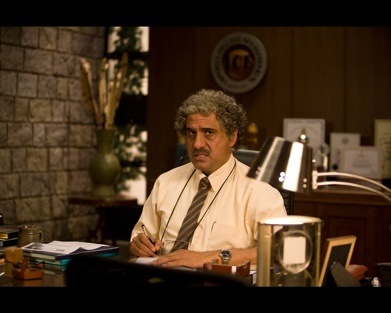
3 Idiots- Life’s Learning

3 Idiots- Life’s Learning


When was it last time that anyone tried to come out with a list of useful lessons from a Hindi movie? I certainly cannot remember and it not surprising considering the cheap entertainment formula Hindi films follows.
But Aamir Khan is different and his movies are worth waiting for. I certainly do so and try to watch his movies on the first day. His choice of subject and production team has been impeccable in the last decade or so.
3 idiots turned out to be better than all my expectations and I cannot stop myself praising it. Here is an article which has very beautifully listed all the lessons that one can take from this great movie. Here is the list with my comments. Think over each point and you will not regret reading it.

1. Never try to be successful, pursue excellence• Success is the bye product & the result
• Excellence always creates Success & it is a process of continual improvement
• Never run after success
• Let it happen automatically in life

How true! It is well said that common sense is not that common otherwise why do we keep pursuing success knowing fully well that there are no shortcuts to success.


2. Freedom to Life - Life is beautiful• Don’t die before the actual death
• Live every moment to the fullest as if today is the last day
• Life is gifted to humankind to live
• Live & Live happily towards happiness
This is so difficult to imbibe but I am sure that those who do so are happier.


3. Passion leads to Excellence
• When your hobby becomes your profession , the passion becomes your profession
• You will be able to lead up to excellence in life
• Satisfaction, Joy, Pleasure & love will be the outcome of the passion
• Following your passion for years , you will surely become somebody one day


4. Learning is very simple-Never stop• Be humble
• Teachers do fail Learners never fail
• Learning is never complicate or difficult Learning is always possible whatever rule you apply
This is not much different from what another favourite of mine Sachin Tendulkar has quoted very often. He believes in “whatever level you reach getting better never stops”.


5. Pressure at head
• Current education system is developing pressure on students head
• University intelligence is useful & making some impact in the life but it cannot be at the cost of life


6. Life is management of emotions & not optimization of intelligence• Memory and regular study have definite value and it always helps you in leading a life.
• You are able to survive even if you can make some mark in the path of the life.
• With artificial intelligence, you can survive & win but you cannot prove yourself genius.
• Therefore, in this process genius dies in you


7. Necessity is mother of invention
• Necessity creates pressure and forces you to invent something or to make it happen or to use your potential
• Aamir Khan in this film, 3 idiots, is able to prove in the film by using vacuum pump at the last moment.


8. Simplicity in life• Life is need base never want base. Desires have no ends.• Simplicity is way of life and Indian culture highly stresses on simple living and high thinking, and this is the way of life: ‘Legs down to earth and eyes looking beyond the sky’ Money, material comfort and happiness are not related. The richest man is not the happiest man for sure and all the so called middle class also get a fair share of happy moments in their life.


9. Industrial Leadership• Dean of the institute in 3 idiots is showing very typical leadership. He has his own principles values and ideology and he leads the whole institute accordingly.
• This is an example of current institutional leadership. In the present scenario, most of the institutes are fixed in a block or Squarish thinking


10. Love is time & space free• Trust your partner
• Love is not time bound and space bound
• It is very well demonstrated in this movie same love was demonstrated by Krishna and Meera.
• Love is border free, time free, unconditional and space free.


11. Importance of words in communication• If communication dies, everything dies.
• Each word has impact and value in communication.
• One word if used wrongly or emphasized wrongly or paused at a wrong place in communication what effect it creates and how is it affected is demonstrated very well in this movie.
This is so true and this why people with the best of communication skills are at the helm everywhere.


12. Mediocrity is penalized• Middle class family or average talent or average institute is going to suffer and has to pay maximum price in the life if they do not upgrade their living standards.
• To be born poor or as an average person is not a crime but to die as an average person with middle class talent is miserable and if you are unable to optimize your potentiality and die with unused potentiality then that is your shameful truth.
• One should not die as a mediocre He/she has to bring out genius inside him/her and has to use his/her potentiality to the optimum level
The summary of this big lecture is “Seek excellence & Success will follow”